

Carbonated Soft Drinks Market Expected to Reach USD 785.46 Billion by 2035 with 5.57% CAGR Growth During 2025-2035
Carbonated Soft Drinks Market
Carbonated Soft Drinks Market Growth Driven by Healthier Formulations, Innovative Flavors, Sustainable Packaging, and Evolving Consumer Preferences
The future of carbonated beverages lies in innovation, healthier choices, and sustainable solutions that align with evolving consumer expectations.”
NEW YORK, NY, UNITED STATES, July 22, 2026 /EINPresswire.com/ -- Market Overview:— Market Research Future (MRFR)
The global Carbonated Soft Drinks Market Growth is witnessing significant transformation as changing consumer lifestyles, evolving taste preferences, and continuous product innovation redefine the beverage sector. Carbonated soft drinks have remained one of the most recognized beverage categories worldwide due to their refreshing qualities, wide availability, and strong brand presence. From traditional cola beverages to flavored sparkling drinks, energy-infused carbonated beverages, and low-calorie alternatives, manufacturers are continuously adapting their offerings to meet modern consumer expectations.
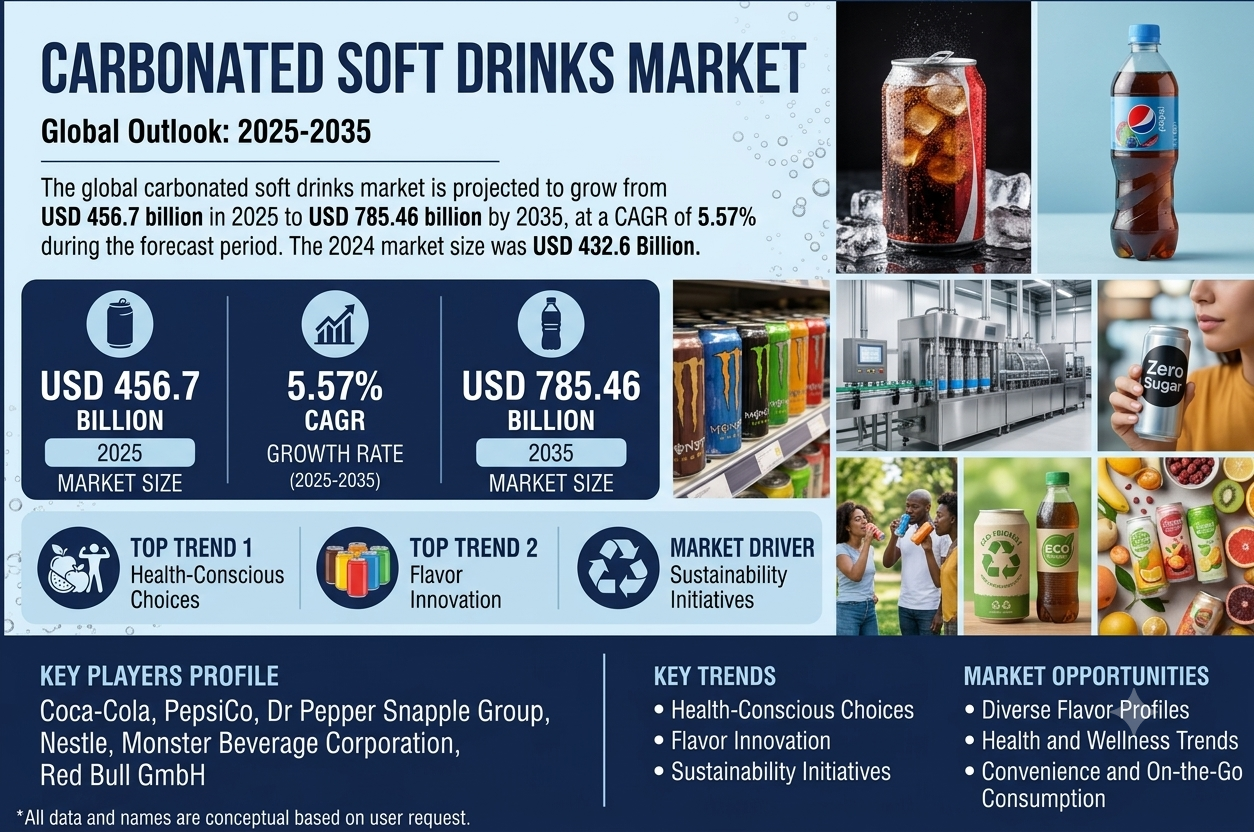
According to Market Research Future analysis, the Carbonated Soft Drinks Market was estimated at USD 432.6 Billion in 2024. The industry is projected to grow from USD 456.7 Billion in 2025 to USD 785.46 Billion by 2035, registering a compound annual growth rate (CAGR) of 5.57% during the forecast period from 2025 to 2035. The report covers revenue forecasts, competitive landscape analysis, growth factors, and emerging trends influencing the market development.
The market growth is supported by increasing demand for convenient beverages, expanding retail networks, rising disposable incomes, and growing consumer interest in diverse flavors and functional beverage options. While conventional carbonated drinks continue to maintain strong demand, manufacturers are increasingly focusing on reduced-sugar, natural ingredient-based, and wellness-oriented products to align with changing consumer priorities.
Changing Consumer Preferences Driving Market Evolution:
Consumer behavior has become one of the most influential factors shaping the future direction of carbonated soft drinks. Earlier, consumers primarily selected soft drinks based on taste, brand reputation, and availability. However, current purchasing decisions are increasingly influenced by nutritional content, ingredient transparency, sustainability, and lifestyle compatibility.
Growing awareness about excessive sugar consumption has encouraged beverage companies to introduce products with reduced sugar content, zero-calorie sweeteners, and alternative formulations. Consumers are increasingly looking for beverages that provide refreshment while supporting healthier lifestyle choices. This shift has encouraged companies to diversify their product portfolios beyond traditional high-sugar carbonated drinks.
The rising popularity of functional beverages is also creating new opportunities within the carbonated drinks segment. Products containing added vitamins, minerals, botanical extracts, electrolytes, and energy-enhancing ingredients are attracting consumers seeking additional benefits from everyday beverages. This trend is particularly strong among younger consumers who prefer products that combine convenience with wellness features.
Growth Factors Influencing the Carbonated Soft Drinks Market:
Increasing Demand for Refreshing and Convenient Beverage Options
The growing need for convenient beverage solutions is a major factor supporting market expansion. Busy lifestyles, urbanization, and changing consumption habits have increased demand for ready-to-drink beverages that can be easily purchased and consumed anywhere. Carbonated soft drinks continue to benefit from their strong presence across supermarkets, convenience stores, restaurants, vending channels, and online platforms.
The portability and long shelf life of carbonated beverages make them attractive choices for consumers across different age groups. Whether consumed during social gatherings, meals, outdoor activities, or daily routines, carbonated drinks continue to maintain their position as accessible refreshment options.
Expansion of Product Innovation and Flavor Variety:
Innovation in flavors and product formulations has become a key strategy among beverage manufacturers. Companies are introducing unique flavor combinations to attract consumers who are looking for new taste experiences. Along with traditional cola flavors, the market has expanded into fruit-based sparkling drinks, exotic flavors, herbal combinations, and limited-edition offerings.
Flavor innovation helps companies attract new consumers while encouraging existing customers to explore different product categories. Seasonal launches and regional flavor preferences are also becoming important strategies for strengthening customer engagement and brand loyalty.
Rising Popularity of Low-Sugar and Zero-Sugar Alternatives
Health consciousness among consumers has created strong demand for low-sugar and sugar-free carbonated beverages. Governments, healthcare organizations, and consumers have increased attention toward reducing sugar intake, encouraging manufacturers to reformulate their products.
Major beverage companies are investing heavily in research and development to improve taste profiles while reducing sugar content. Advances in sweetener technologies have enabled companies to create beverages that provide similar taste experiences with fewer calories.
This movement toward healthier alternatives is not only changing product development strategies but also reshaping competition within the industry. Companies that successfully balance taste, nutrition, and affordability are gaining stronger consumer acceptance.
Get Full PDF Sample Copy of Report: (Including Full TOC, List of Tables & Figures, Chart) @
https://www.marketresearchfuture.com/sample_request/7861
Emerging Trends Transforming the Beverage Industry:
Premiumization of Carbonated Beverages
Premiumization has become a growing trend within the carbonated soft drinks sector. Consumers are increasingly willing to pay more for beverages offering unique flavors, premium ingredients, attractive packaging, and enhanced experiences.
Craft-inspired sparkling beverages, specialty carbonated drinks, and limited-edition products are gaining attention among consumers seeking differentiated options. Brands are using premium positioning to create stronger emotional connections with customers and increase product value.
Premium packaging designs, sustainable materials, and innovative branding strategies are also contributing to the growth of premium carbonated beverage categories.
Growth of Sustainable Packaging Solutions
Environmental concerns are influencing packaging decisions across the beverage industry. Consumers are becoming more aware of plastic waste and are increasingly supporting brands that adopt sustainable practices.
Manufacturers are focusing on recyclable packaging materials, lightweight containers, and environmentally responsible production methods. Sustainable packaging initiatives are becoming an important part of corporate strategies as companies attempt to reduce their environmental footprint.
The adoption of eco-friendly packaging solutions not only supports environmental goals but also improves brand perception among environmentally conscious consumers.
Digital Marketing and E-Commerce Expansion
Digital transformation has significantly changed how beverage brands interact with consumers. Social media campaigns, influencer partnerships, personalized marketing, and online promotions are helping companies build stronger relationships with customers.
E-commerce platforms have also created new distribution opportunities for carbonated beverage manufacturers. Consumers can now easily access a wide range of products through online marketplaces and direct-to-consumer channels.
Digital platforms allow brands to analyze consumer preferences, launch targeted campaigns, and introduce customized product experiences. This growing integration of technology and beverage marketing is expected to continue influencing market development.
Key Opportunities in the Carbonated Soft Drinks Market:
The increasing demand for healthier beverage choices represents one of the most significant opportunities for market participants. Companies that successfully develop low-sugar, natural, and functional carbonated beverages are expected to gain competitive advantages in the evolving market environment.
Another important opportunity lies in emerging economies where urbanization, rising incomes, and expanding retail infrastructure are increasing beverage consumption. Developing regions are witnessing greater availability of branded beverages through supermarkets, convenience stores, and digital commerce platforms.
Product diversification also provides opportunities for companies to strengthen their market position. By introducing new flavors, innovative packaging formats, and beverages targeting specific consumer groups, manufacturers can expand their customer base and improve brand engagement.
The integration of technology in production, distribution, and marketing processes is creating additional growth opportunities. Smart manufacturing, data-driven consumer insights, and digital sales channels are helping companies improve efficiency and respond faster to market changes.
Challenges Affecting Market Growth:
Despite strong growth potential, the Carbonated Soft Drinks Market faces several challenges. Increasing concerns regarding sugar consumption, artificial ingredients, and health impacts associated with excessive consumption have influenced consumer attitudes toward traditional soft drinks.
Regulatory measures, including sugar taxes and labeling requirements in various countries, are encouraging companies to modify their product formulations. Beverage manufacturers must continuously adapt to changing regulations while maintaining product quality and consumer satisfaction.
Competition from alternative beverage categories is another challenge affecting market dynamics. Consumers now have access to a wide range of options, including juices, bottled water, functional beverages, sports drinks, and plant-based beverages. This expanding choice requires carbonated soft drink companies to continuously innovate and differentiate their products.
Additionally, fluctuations in raw material prices, supply chain disruptions, and environmental concerns related to packaging materials can impact operational costs and profitability.
Market Segmentation:
The Carbonated Soft Drinks Market is segmented based on flavor, packaging type, and distribution channel. Each segment contributes to market development by addressing changing consumer preferences, convenience needs, and purchasing behavior.
▪️Flavor Outlook:
Cola:
Cola remains a highly preferred flavor due to its strong brand recognition, familiar taste, and long-standing consumer loyalty. It continues to hold a significant position among carbonated beverage choices worldwide.
Lemon:
Lemon-flavored soft drinks are gaining popularity due to their refreshing taste and appeal among consumers seeking lighter and citrus-based beverage options.
Lime:
Lime flavors attract consumers with their crisp and refreshing profile. They are increasingly preferred as alternatives to traditional carbonated drink flavors.
Orange:
Orange-flavored beverages continue to experience steady demand because of their fruity taste, wide consumer acceptance, and appeal across different age groups.
Others:
This segment includes innovative flavors such as tropical fruits, berry blends, and specialty combinations. Manufacturers are introducing new flavor variations to attract consumers and enhance product differentiation.
▪️Packaging Type Outlook:
Bottles:
Bottles remain a popular packaging format due to their availability in different sizes, convenience for household consumption, and suitability for sharing occasions.
Cans:
Cans are increasingly preferred for their portability, durability, and convenience. They are widely used for individual servings, outdoor activities, and on-the-go consumption.
▪️Distribution Channel Outlook:
Supermarkets & Hypermarkets:
Supermarkets and hypermarkets represent a major sales channel due to their extensive product availability, promotional offers, and ability to provide multiple beverage options in one location.
Specialty Stores:
Specialty stores support the availability of premium and unique beverage products while catering to consumers looking for specific brands and flavors.
Online:
Online platforms are expanding rapidly due to convenience, doorstep delivery, and increasing consumer adoption of digital shopping channels.
Others:
Other distribution channels include convenience stores, restaurants, vending machines, and food service outlets, providing easy access to carbonated soft drinks across various consumption occasions.
Regional Analysis of the Carbonated Soft Drinks Market:
The Carbonated Soft Drinks Market has a strong global footprint across North America, Europe, Asia-Pacific, South America, and the Middle East & Africa, with each region contributing to industry growth through changing consumer preferences, expanding distribution networks, and product innovation. North America remains a prominent region due to established beverage brands, advanced retail infrastructure, and high demand for convenient drink options. Increasing consumer interest in healthier beverages is encouraging companies to introduce zero-sugar drinks, natural ingredient-based formulations, and sustainable packaging solutions. Europe is witnessing market transformation driven by rising health awareness, regulatory focus on sugar reduction, and growing demand for environmentally friendly products. Beverage manufacturers are adapting through product reformulation, sustainable practices, and the introduction of premium and innovative flavors.
The Asia-Pacific region presents significant growth opportunities due to rapid urbanization, increasing disposable incomes, expanding retail channels, and rising consumption of packaged beverages. Young consumers are driving demand for new flavors, attractive packaging, and unique beverage experiences. South America continues to experience steady development supported by strong beverage consumption patterns, improved distribution infrastructure, and increasing availability of branded products. Meanwhile, the Middle East & Africa region is emerging as a promising market due to urban growth, expanding retail networks, and rising demand for refreshing beverages. Companies are focusing on regional preferences, wider distribution, and product innovation to strengthen their presence across these developing markets.
Competitive Landscape of the Carbonated Soft Drinks Market:
The Carbonated Soft Drinks Market is characterized by the presence of several established global companies competing through product innovation, brand strength, marketing strategies, and distribution capabilities.
Major companies profiled in the market include:
▪️Coca-Cola
▪️PepsiCo
▪️Dr Pepper Snapple Group
▪️Nestle
▪️Monster Beverage Corporation
▪️Red Bull GmbH
▪️Britvic
▪️Keurig Dr Pepper
▪️and Fanta.
Leading companies are focusing on strategies such as new product launches, portfolio expansion, partnerships, sustainable packaging initiatives, and digital marketing campaigns to strengthen their market positions.
Coca-Cola continues to maintain a strong global presence through its extensive beverage portfolio and focus on product diversification. The company has expanded its offerings to include reduced-sugar and alternative beverage options to address changing consumer preferences.
PepsiCo has emphasized innovation across its beverage portfolio by introducing products designed around evolving wellness trends and consumer demands. The company continues to invest in sustainable practices and consumer engagement strategies.
Other beverage companies are also strengthening their positions by focusing on specialized categories such as energy-based carbonated beverages, premium sparkling drinks, and functional formulations. Competition within the industry is increasingly driven by innovation, sustainability, and the ability to respond quickly to consumer trends.
Future Outlook of the Carbonated Soft Drinks Market:
The future of the Carbonated Soft Drinks Market will be driven by product innovation, evolving consumer preferences, and growing demand for healthier beverage choices. While traditional carbonated drinks will continue to hold consumer interest, manufacturers are expected to focus on low-sugar, natural, and functional beverage options to meet changing lifestyle trends. Advancements in ingredient technology and flavor development will support the creation of products that offer improved taste and better nutritional value.
Sustainability will remain a key focus, with companies investing in recyclable packaging, efficient production processes, and environmentally responsible practices. Additionally, digital platforms and online sales channels will create new opportunities for customer engagement and market expansion. Rising interest in unique flavors, convenient packaging formats, and wellness-focused beverages is expected to support continued growth and innovation in the global carbonated soft drinks industry.
Frequently Asked Questions?
1. What is the projected growth outlook for the Carbonated Soft Drinks Market?
The Carbonated Soft Drinks Market is projected to experience steady growth between 2025 and 2035, supported by rising demand for innovative beverages, healthier formulations, expanding distribution networks, and changing consumer preferences.
2. What factors are driving the growth of the Carbonated Soft Drinks Market?
Key growth factors include increasing demand for convenient beverages, product innovation, rising popularity of low-sugar alternatives, expansion of online retail channels, and growing consumption in emerging regions.
3. What trends are influencing the future of carbonated soft drinks?
Major trends include the development of healthier beverage options, sustainable packaging adoption, premium product offerings, unique flavor innovations, and the integration of digital marketing strategies.
4. Which companies are leading the Carbonated Soft Drinks Market?
Major companies operating in the market include Coca-Cola, PepsiCo, Dr Pepper Snapple Group, Nestle, Monster Beverage Corporation, Red Bull GmbH, Britvic, Keurig Dr Pepper, and Fanta.
Discover Related Research Reports By Market Research Future:
Cannabis Infused Drinks Market:
https://www.marketresearchfuture.com/reports/cannabis-infused-drinks-market-24848
Fermented Food And Drinks Market:
https://www.marketresearchfuture.com/reports/fermented-food-and-drinks-market-27255
Almond Drink Market:
https://www.marketresearchfuture.com/reports/almond-drink-market-12513
Commercial Drink Mixer Market:
https://www.marketresearchfuture.com/reports/commercial-drink-mixer-market-25996
Electrolyte Drink Market:
https://www.marketresearchfuture.com/reports/electrolyte-drink-market-32647
Sagar Kadam
Market Research Future
+1 628-258-0071
email us here
Legal Disclaimer:
EIN Presswire provides this news content "as is" without warranty of any kind. We do not accept any responsibility or liability for the accuracy, content, images, videos, licenses, completeness, legality, or reliability of the information contained in this article. If you have any complaints or copyright issues related to this article, kindly contact the author above.
